
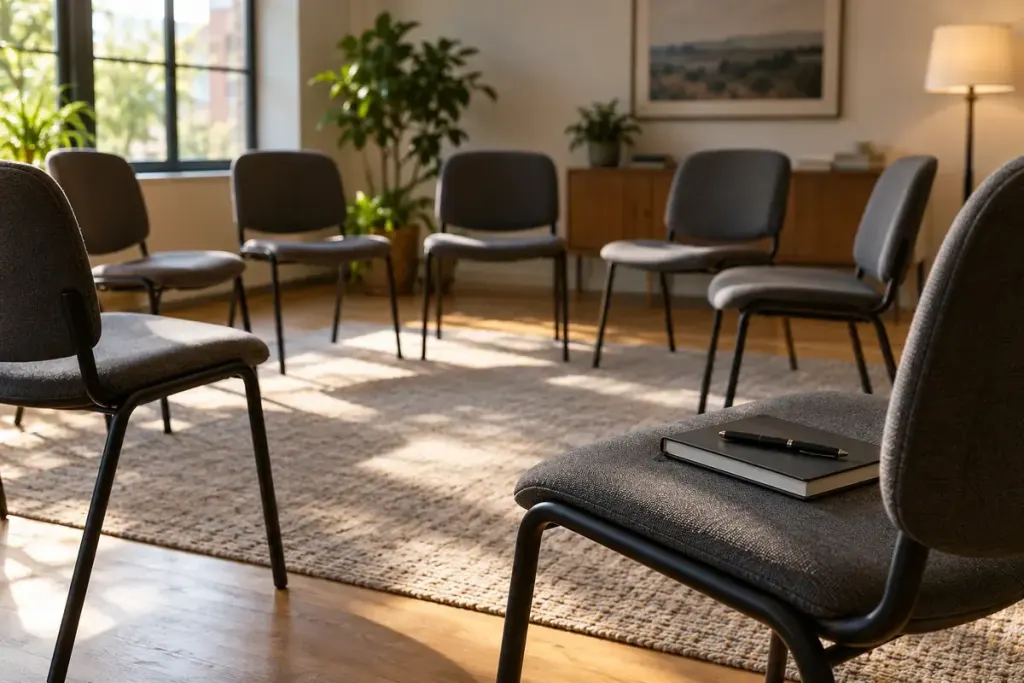
A useful idea comes up in a recovery meeting and you reach for a notebook. Writing may help you remember it, but the conversation can also contain other people’s sensitive experiences. Before taking notes, ask how the group handles writing, devices and recordings.
Learn the arrangement for this meeting
Groups differ in purpose and organisation. A clinical group, peer-led meeting and educational workshop may have different expectations. Ask the facilitator what is permitted and whether there are written guidelines. Do not assume that permission to attend includes permission to make an audio recording or capture a screen.
If you need notes or another aid for accessibility, explain that privately and ask what arrangement can support participation while respecting others. A useful solution may be facilitator-provided material or notes focused on general learning rather than participants’ accounts.
Write about your own next step
Where notes are allowed, distinguish personal reflection from a record of someone else’s story. For example, you might write a question you want to discuss with your clinician or a coping strategy you would like to explore. Avoid names, identifying details and quotations from other participants unless the agreed process specifically permits them.
Think about where the notes will be stored. A notebook left on a shared table or an automatically synced document can reach an unintended audience. Use a storage method appropriate to the sensitivity and your circumstances.
Ask before sharing afterwards
A helpful conversation does not automatically belong in a social-media post, even with names removed. A combination of details can still identify someone. When uncertain, leave the account out and discuss the general idea without attributing another person’s experience.
This is a practical privacy discussion, not a promise that any group can guarantee confidentiality. Clear expectations help you participate thoughtfully while preserving the trust that makes people willing to speak.