
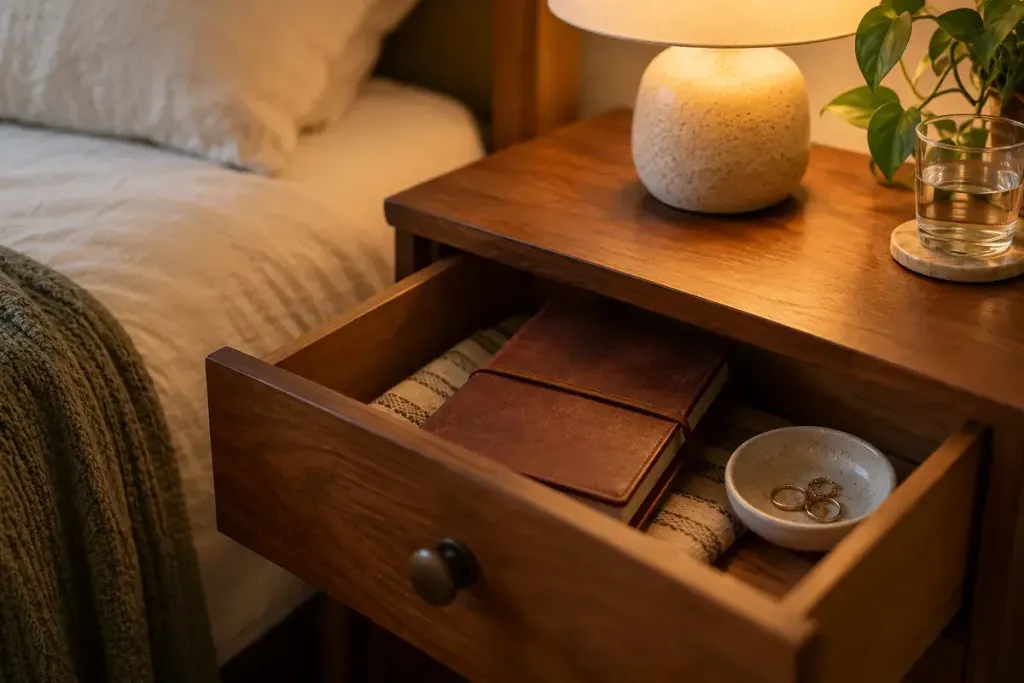
A notebook can hold unfinished thoughts that you would not choose as a message to anyone else. If you keep one during recovery, decide how private it should be before relatives begin treating it as an update on your progress.
Writing is optional. A journal is not a requirement for recovery, a diagnostic test or a substitute for professional care. Some people prefer brief notes, spoken reflections with a clinician, or no personal record at all.
Separate reflection from communication
You might keep a private notebook and a separate short list of questions for appointments. The first can contain uncertainty; the second can help you communicate what you want the care team to address. You do not have to hand over the whole notebook to ask one question.
For an invented example, a person writes a frustrated page after a difficult day but later chooses to discuss only the practical problem of getting to an appointment. Sharing that specific concern is not dishonest. It is a decision about what information is useful in that conversation.
Make the storage choice deliberate
Consider who can reach a paper notebook and whether an app synchronises across shared devices. Check the app’s account, sharing and privacy settings before storing sensitive details. A device lock does not tell you everything about cloud storage or an application’s data practices.
Avoid including other group members’ names or recognisable stories. Your reflection does not require a detailed record of someone else’s disclosure. If writing is part of an agreed clinical exercise, ask the clinician what should be recorded and who will review it.
Give supporters another route
A simple boundary can be: “This notebook is private. I will tell you if there is a practical way you can help.” Agree a separate check-in if you want one. Support does not need to depend on inspecting someone’s personal writing.
If writing repeatedly leaves you more distressed, pause and discuss that with your care professional. You can change the format or stop. The notebook should serve a purpose you have chosen, with room for thoughts that are still taking shape.