
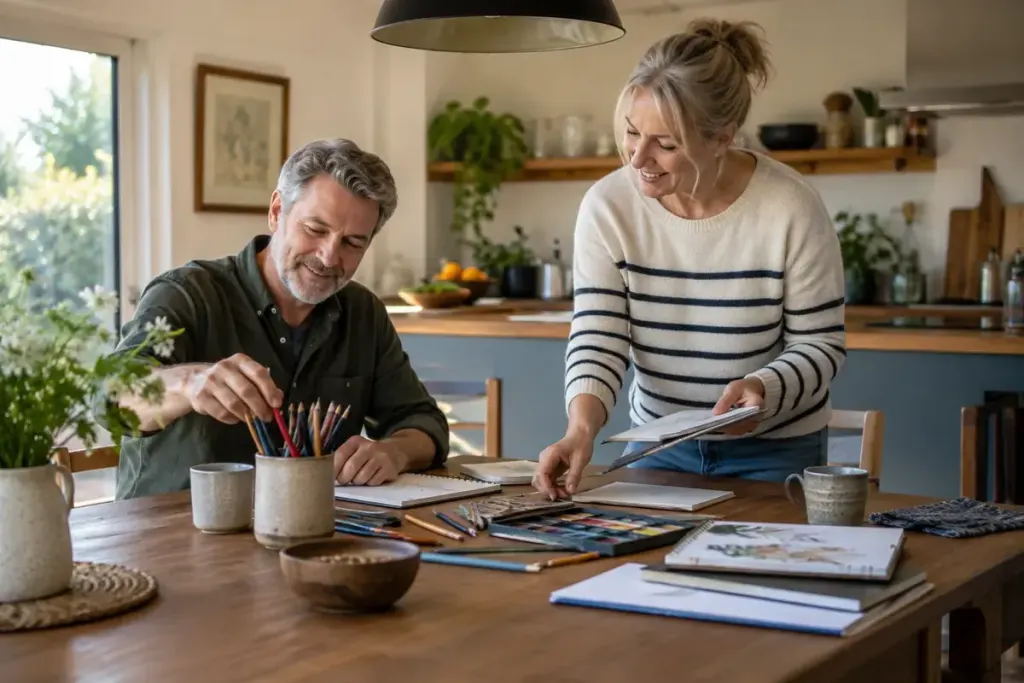
A relative remembers how much someone enjoyed drawing and buys an elaborate set of materials to welcome them home. The gesture is kind, but the invitation can become heavy if using the gift is treated as proof that recovery is going well.
A hobby can simply be an activity the person chooses. It does not need to become a measure of motivation, gratitude or treatment progress. Ask what sounds enjoyable now rather than assuming an old interest still fits.
Offer a small version with a clear ending
Suggest a manageable activity and let the person change or decline it. “Would you like to sketch with me for a little while on Saturday?” leaves more room than planning a full day of classes without asking.
Agree practical details such as place, transport, cost and how to finish early. Where the activity involves a setting or substance the person wants to avoid, discuss alternatives. Do not surprise them with a social environment they have already said is difficult.
Let ordinary preferences remain ordinary
The person may dislike the chosen materials, feel tired or want to do something else. Those responses do not give a supporter enough information to judge the course of treatment. Avoid interpreting every cancelled session or unfinished drawing as a clinical sign.
For an illustrative arrangement, two friends agree to spend half an hour repairing a simple garden planter. One prefers sorting the tools to doing the repair. The activity can still be shared without requiring equal enthusiasm or a finished object.
Keep the invitation separate from professional care
A hobby is not a replacement for agreed treatment or professional support. If the person has questions about an activity’s suitability for their health or care plan, encourage discussion with the relevant professional. Supporters should not prescribe exercise, exposure or other therapeutic tasks under the label of leisure.
Afterwards, ask whether they would like another invitation and what they would change. Avoid posting photographs or telling others about participation without permission. The useful outcome is a little space for choice and ordinary companionship, including the choice not to repeat the activity.