
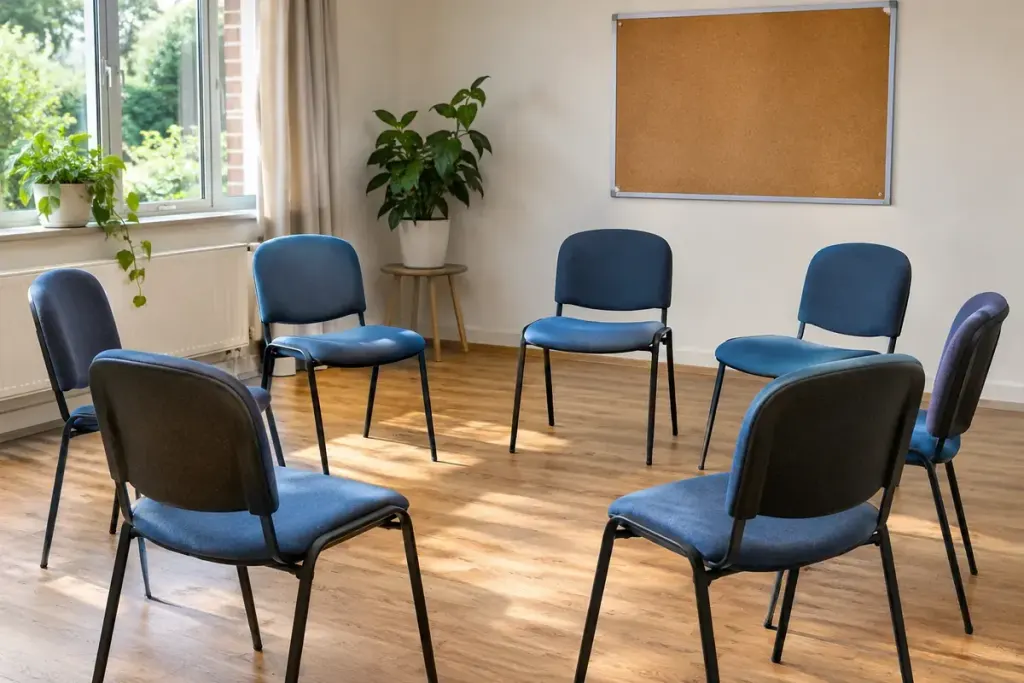
In some peer groups, a person can feel unsure whether mentioning a psychiatric condition belongs in the conversation. A dual-recovery group is intended to make room for mental-health and substance-use concerns together, rather than asking participants to leave one part of their experience outside the door.
That purpose does not turn a peer meeting into a clinic. Knowing the difference can make a first visit less confusing.
One established example
The Massachusetts Clubhouse Coalition describes its Dual Recovery Anonymous meetings as a place for people seeking support with both mental-health and substance-use recovery. This is an example of a peer setting that explicitly welcomes both concerns, rather than requiring participants to discuss them in separate groups.
Those details describe DRA. Other groups using “dual recovery” or “co-occurring conditions” may have a different structure. Read the actual group’s description rather than assuming all meetings share the same approach.
Ask about the meeting, not someone else’s diagnosis
A short enquiry can establish the practical basics without requiring you to send a personal history. For example: “Is this meeting open to a first-time participant, how is it facilitated, and can I listen without speaking?” You can also ask about access, online participation and the approach to privacy.
If a group uses spiritual language, ask how that is understood in practice. If you are looking for a secular format, say so. Finding a setting that fits is a reasonable part of choosing support, not a failure to be committed.
Keep clinical decisions with the clinical team
A peer may describe a medicine or therapy that helped them. That account can be meaningful without being a recommendation for you. Bring treatment questions to the clinician who knows your history; do not stop or change prescribed medication because a meeting member had a different experience.
It may help to keep two separate notes after a meeting: “Something I want to try in daily life” and “Something I want to discuss with my clinician.” A suggestion about arranging a lift to an appointment belongs in a different category from a suggestion about a prescription.
After a first visit, consider whether you could speak or listen without being pressured, whether the boundaries were clear and whether the group treated both parts of recovery respectfully. You can attend another meeting, ask a question or look elsewhere. Peer support works best as an addition to an appropriate care network, with a role you can understand.